Table Of Content

If you, your kids, or anyone else in the house is in an area known to have them, check for ticks before coming inside. If it’s in your yard, garden, or otherwise near your home, do not try to drown it with a hose or stomp on it. Ticks are remarkably tough and can survive those kinds of attacks. Unlike other animals that build a nest to house their eggs, a female tick simply deposits her eggs in a given location. There’s no assembling of materials to make a nest or occupation of a nest built by another creature.
What is a Nymph?
If you find a tick attached to your body (or on your pet), consult with a medical care provider for instructions on removal and options for treatment. Insect pests complete their lifecycle through either simple or complex metamorphosis. Complex metamorphosis involves an insect changing from egg to larva (caterpillar) to pupa to adult. Ticks are obligate hematophages, which means their diet is exclusively blood.
Pros Explain How to Keep Ticks out of Your Yard and Away From Your Body - Prevention Magazine
Pros Explain How to Keep Ticks out of Your Yard and Away From Your Body.
Posted: Tue, 26 May 2020 07:00:00 GMT [source]
American Dog Tick
Tick nymphs still only have six legs and are the size of a poppy seed. These tiny young ticks are easily overlooked, so be sure to inspect carefully for them. As we continue to understand these tiny creatures better, it’s significant to remember that their survival skills are primarily a testament to their adaptability to thriving in various conditions. Therefore, a tick’s life expectancy without a host can serve as a useful model when studying survival techniques of parasites in general. Ticks are surprisingly resilient indoors and can live for several weeks up to a year.
How to Control Wild Rodent Infestations Healthy Pets, Healthy People CDC - CDC
How to Control Wild Rodent Infestations Healthy Pets, Healthy People CDC.
Posted: Tue, 03 Jan 2023 08:00:00 GMT [source]
Dry clothes, then wash them.
The time it takes for tick eggs to hatch differs from one tick species to another but can range from a few days to several weeks. The eggs are laid in moist environments, such as leaf litter or tall grass, and must be kept moist to survive. Ticks are most commonly brought inside on pets and outdoor clothing. Ticks are known to transmit a number of serious diseases including Lyme disease, Rocky Mountain spotted fever, and tularemia. Many tick treatments involve the application of pesticide that can cause harm to humans and pets if used improperly. When they hatch, they are called 'larvae' but do not look like worms.
How Long Can Ticks Live Without Food?
While ticks can survive without an immediate host, they do require a blood meal at each stage of their life for growth and reproduction. They will deplete their energy reserves over time and fail to progress to the next life stage. Once an adult female feeds, she lays her eggs and typically dies, marking the end of her lifecycle. Once a tick starts feeding on a dog or a human, it generally remains attached to the host for anywhere between a few days to two weeks, depending on the tick’s stage and species. After a successful feed, ticks drop off the host, undergo a molting phase if required, or the adult females lay eggs, thus securing the next generation.
Factors Influencing Tick Lifespan
However, ticks often die before finding a new host on which to feed, according to the Centers for Disease Control and Prevention (CDC). During especially colder seasons, up to 20% of a local tick population could die off. As records indicate warmer and warmer years, ticks also come out sooner. Since not as many ticks were culled during the winter, there could be more once temperature conditions are ideal for them to thrive. Veterinarians recommend that the best defense is a good offense – and that you thoroughly check your dog for ticks as soon as you return from outside.
How Long Can Ticks Live Without A Host?
Let’s understand how tick survival is influenced by their interactions with hosts. Yes, ticks can survive without food or blood for extended periods, thanks to their slow metabolism and stored energy reserves. But remember, they cannot grow or reproduce without a blood meal. This might sound surprising, but ticks can survive underwater for up to a few days or weeks. This unique survival skill protects them from getting washed away by rain or other water sources.
Treat your skin with EPA-approved tick or general insect repellents and treat clothing and gear with products containing 0.5% permethrin. Ticks can live for long periods without eating or having a blood meal. Depending on their species and life stage, ticks can survive for up to one to three years sans a blood meal. Ticks feed once at each stage of their life cycle – making it three blood meals in total, one as a larva, one as a nymph, and one as an adult. The host could be any warm-blooded animal, such as a bird, rodent, dog, deer, or human.

What Is A Ticks Life Span?
With your tweezers, grasp as close to the head of the tick as possible and pull upward with a steady motion. Don’t twist or jerk the tick, because that could cause its mouth parts to break off and remain in your skin. If this happens, try to remove as much of the mouth parts as you can with your tweezers without damaging the skin.
I once live-captured a mouse in an upstairs closet that had a 3-day engorged nymph tick attached to it. While that tick wasn’t a risk to anyone inside (because it already had its blood meal from the mouse), it was still kind of a surprise. I’ve always thought that the mice I caught in the house were mostly adapted to indoor life.

Learn more about the different types of ticks by reading this other article. In this article from AnimalWised, we will provide you with a detailed explanation on how to effectively deal with a tick infestation in your home. Some people are afraid that they bring ticks inside on their firewood. It’s possible, I suppose, but probably ranks lower down on the list of ways ticks get inside. Spiders and other wood-loving beetles maybe, but ticks, not so much.
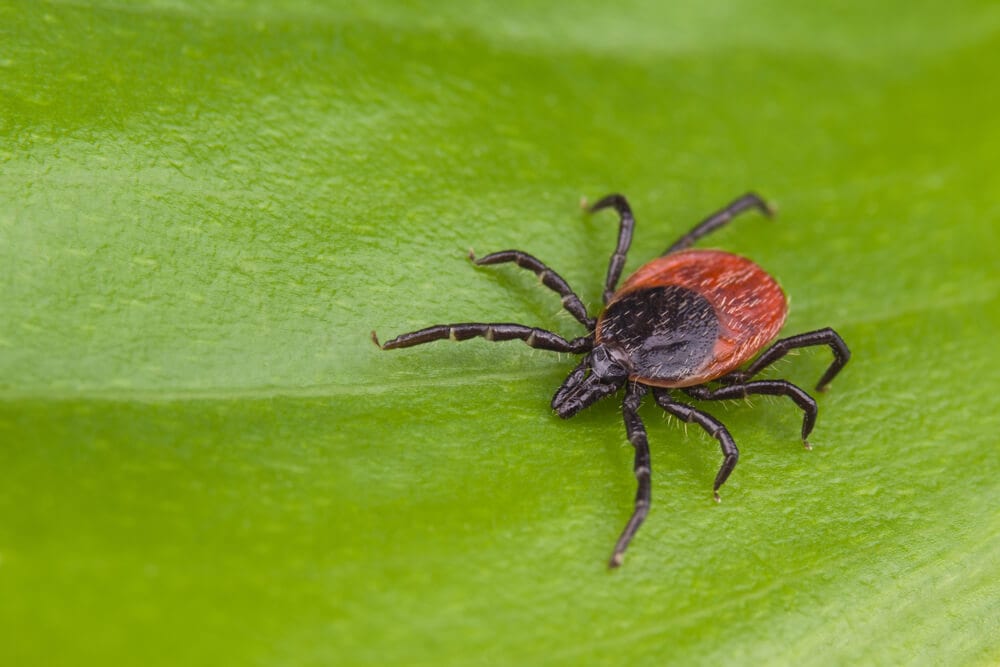
Dr. Mather recommended products that kill ticks before they bite, like Frontline Shield, K9 Advantix II and Vectra 3D. Similarly to spiders and mites, ticks are arachnids (they have eight legs–although younger tick larvae and nymphs have only six legs). When unfed, adult ticks are dark in color, flat, and teardrop-shaped; when fed, they engorge to the size of a raisin. How long ticks can survive without eating depends on the circumstances and species.
Ticks range in size from 1–2 millimeters (mm) in diameter (the size of a poppy seed) to as large as 10 mm in diameter (the size of a pencil eraser). It’s possible for you to come into contact with a tick if there are wooded or brushy areas near your home and you’re outdoors when the weather is warm. Ticks can go through this cycle of feeding and molting 2 to 3 times during their lifetime.



No comments:
Post a Comment